



Part One
This was one of the largest gold heists in world history, carried out in the early days of the Sudanese Civil War in April 2023.
While paramilitary forces were fighting with their former allies in the Sudanese army, they took control of the state gold refinery in Khartoum and entered the central bank. At least 15 tons of gold bars worth about 100 million dollars at the time were stolen. Jewelry looted from the safety deposit boxes of commercial banks was also taken.
A witness, whose account has been confirmed by three other individuals familiar with the operation, says the paramilitary Rapid Support Forces (RSF) smuggled the gold across borders, including to neighboring countries Chad and South Sudan. The RSF denies involvement in this incident, and the details of this theft remain disputed.
However, where a significant portion of this gold later went is not much of a mystery. At the international airport in South Sudan’s capital, Juba, the gold was loaded onto planes destined for the United Arab Emirates.
This informed individual says,
The Emiratis sent cargo planes, sometimes civilian and sometimes military, to load and transport the gold.
The role of the United Arab Emirates in this affair highlights the pivotal position of this Gulf country as a hub for Africa’s offshore capital and the most influential foreign power on the continent over the past decade.
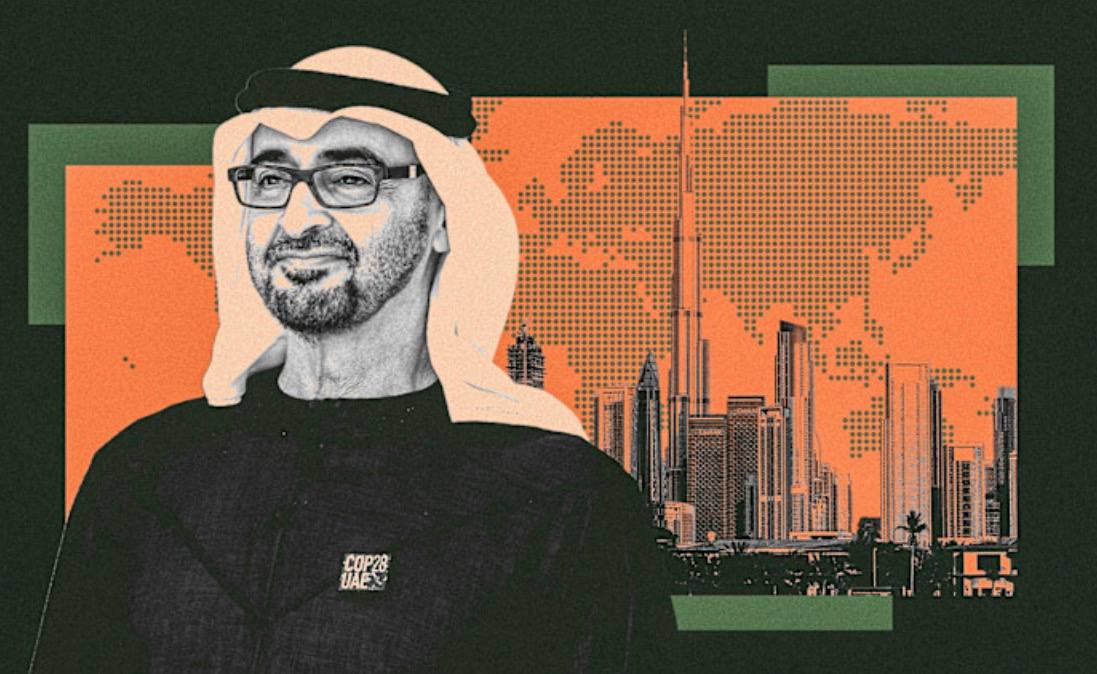
This small desert nation, under the leadership of its autocratic ruler Sheikh Mohammed bin Zayed Al Nahyan, known as MBZ, has rapidly expanded its investments, political influence, and military equipment across Africa. This effort is aimed at exploiting the continent’s trade and resources and preparing for a post-oil future.
From Emirate to Empire
The extent of the United Arab Emirates’ power and influence spans across the African continent, from ports to green energy projects and industrial-scale farms. To strengthen its food security, the country has leased millions of hectares of farmland. It has also acquired mining rights from the Democratic Republic of Congo to Guinea to secure vital minerals needed for the transition to clean energy and its growing defense sector.
The rapid expansion of the UAE’s influence and its imperial-like ambitions under the leadership of Mohammed bin Zayed (MBZ) have surprised African policymakers. Many consider this the most significant geopolitical shift in Africa since China began its efforts to engage with the continent at the start of the new millennium through a mix of loans, infrastructure projects, and mining contracts.
However, this engagement comes at a cost. The UAE is creating a complex network of commercial, industrial, and military ties that sometimes help strengthen the sovereignty of fragile countries but in some cases also weaken it, with war-torn Sudan being the most prominent example.
