



Iran in BRICS: Crossing Isolation or Seeking New Leverages
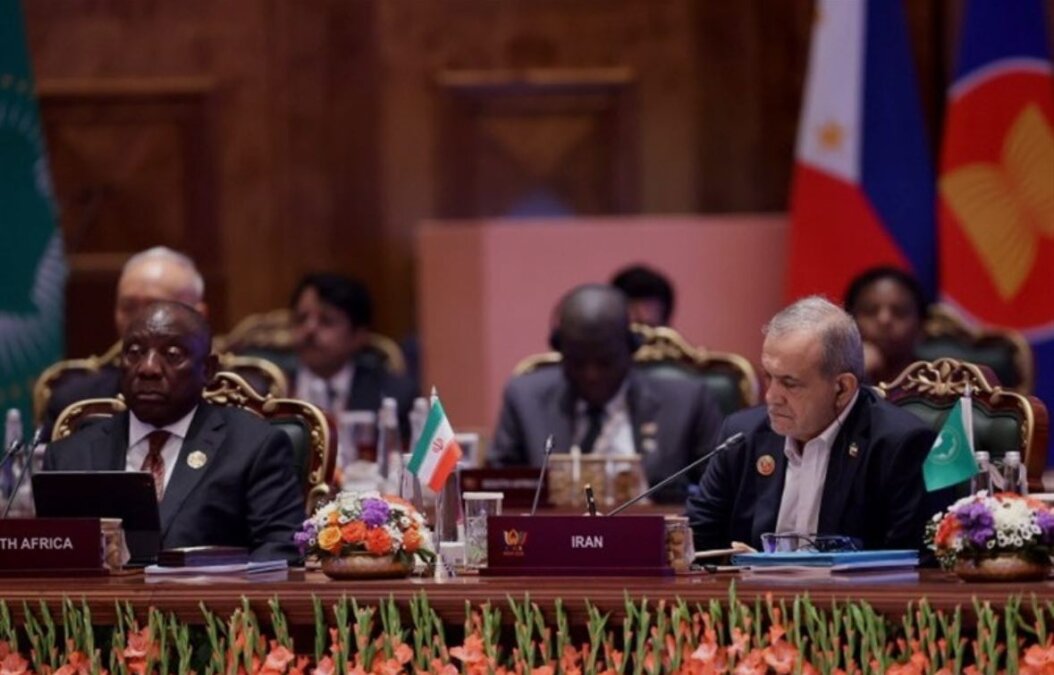
The approach of the Islamic Republic of Iran in the recent BRICS summit can be seen as an effort to turn membership in this group into a political and economic leverage against Western pressures. Tehran participated in this summit under circumstances where regional tensions and confrontations with the U.S. and Israel had turned security issues into one of the most important challenges facing BRICS. Iran sought for the group to take a clearer stance against the actions of the U.S. and Israel, but the final stance of BRICS was more focused on restraint, dialogue, respect for national sovereignty, and diplomatic resolution of crises. Nevertheless, criticism of sanctions and unilateral coercive measures still held an important place in the group’s positions, and from Tehran’s perspective, this issue creates significant political capacity.
Economically, Iran views BRICS as an opportunity to reduce its vulnerability to Western sanctions and decrease dependency on the dollar-based financial system. Expanding trade with local currencies, creating independent payment mechanisms, and strengthening banking cooperation are among the objectives Tehran pursues through its presence in BRICS. However, the gap between the political statements of BRICS members and their ability to create an alternative financial system should not be overlooked. Countries like China and India still have extensive economic relations with the U.S. and are not necessarily willing to bear the cost of secondary U.S. sanctions for cooperating with Iran. Therefore, Iran’s economic achievements from BRICS in the short term are more assessable in terms of diversifying trade and financial routes rather than creating a complete alternative to the Western financial system.
At the political and diplomatic level, Iran’s presence in BRICS holds special significance for Tehran. The Islamic Republic uses this mechanism not only to strengthen relations with non-Western powers but also to showcase its position in the emerging multipolar order. Meetings between Iranian officials and the leaders of member countries and efforts to develop bilateral cooperation indicate that Tehran views BRICS as more than just an economic institution, but as a space that can also help manage some regional disputes. From this perspective, Iran’s presence alongside countries like China, India, and Russia at least diplomatically provides the opportunity to reduce the pressure from the image of international isolation and allows Tehran to expand its relations with a more diverse set of global and regional powers.
Overall, Iran’s strategy in BRICS can be seen as a combination of economic pragmatism, political multilateralism, and efforts to reduce sanctions pressure. Tehran seeks on one hand to enhance BRICS’ capacity to counter unilateral sanctions and strengthen the multipolar order, and on the other hand, it must navigate the differing interests of members and practical limitations to maintain the group’s cohesion. Therefore, the importance of BRICS for Iran in the current situation is more about providing a set of alternative levers for the country’s sanctioned foreign policy and economy than forming an anti-Western bloc. The success of this strategy will ultimately be measured not by political declarations but by indicators such as increased trade with BRICS members, the development of non-dollar payment mechanisms, attracting investments, and reducing foreign transaction costs.
