


Maduro Approaches the Finish Line
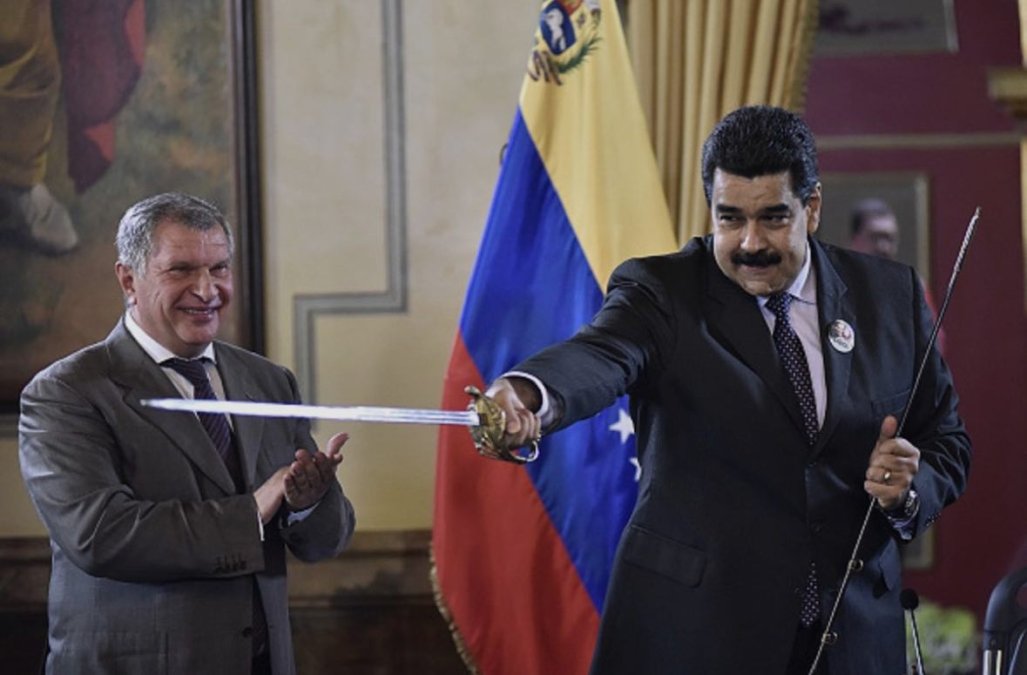
According to the Iran Gate News Agency, the increased U.S. military presence off the coast of Venezuela, which began in August, was followed by U.S. attacks on more than twenty boats suspected of drug trafficking, resulting in over eighty deaths. During three months of deadly boat attacks, the Trump administration increased pressure on Nicolás Maduro’s regime by sending the USS Gerald R. Ford, the most advanced aircraft carrier in the U.S. military, to the Caribbean Sea, designating a cartel linked to Maduro as a foreign terrorist organization, and issuing repeated threats of future ground attacks, ostensibly to combat drug trafficking.
Despite reports that Trump ordered a halt to diplomatic talks with Maduro, communication between the Venezuelan regime and the United States continued. On December 1st, the President confirmed he had a phone call with Maduro. Before this call, Trump had said he was ready to talk to Maduro, stating that if we can save human lives, we can do things the easy way, which is good, and if we have to do it the hard way, that’s also fine.
Doing things the hard way could mean war with Venezuela, which would be a mistake and contradicts Trump’s national security strategy that prohibits direct intervention to achieve its goal of creating a stable and well-governed Western Hemisphere. A U.S.-imposed regime change through force would likely lead to chaos and ultimately weaken the Venezuelan opposition, which is led by María Corina Machado, the 2025 Nobel Peace Prize winner. The United States has not achieved regime change unilaterally and solely through air power, and a ground invasion remains unlikely.
Instead of pursuing further conflict, the Trump administration should focus on using its military deployment to bring Maduro to the negotiation table. As the main power interested in Venezuela’s future, the United States has acted as both a catalyst and an obstacle in negotiations between Maduro’s regime and the Venezuelan opposition at various times since 2014. Utilizing the lessons learned from these efforts to reach an agreement and prevent further escalation of tensions is crucial.
Negotiations without U.S. involvement faced challenges.
Due to the recent increase in military power, the United States shifted from a behind-the-scenes supporter of the Venezuelan opposition to a direct participant in negotiations. In negotiations with Maduro’s regime over the past decade, the opposition sought to restore democracy through credible elections with international observers. These negotiations often faced difficulties due to internal disagreements within both Maduro’s regime and the opposition, as hardliners on both sides tried to sabotage talks to undermine moderates seeking dialogue. However, negotiations failed partly because the United States either did not support them or openly opposed them.
Four attempts that failed between 2014 and 2019 include the UNASUR-Vatican dialogue in 2014. The United States did not directly support this effort, which was backed by the Union of South American Nations (UNASUR) and facilitated by the Vatican, Brazil, Colombia, and Ecuador. This dialogue took place amid widespread anti-government protests in Venezuela that resulted in over forty deaths. Senior officials in the Obama administration expressed cautious optimism about the talks but condemned the violence and refused to lift sanctions against Venezuela. After this effort failed, Obama maintained Venezuela’s sanctions program, sanctioned officials involved in human rights abuses, and declared the situation a threat to U.S. national security.
The Vatican dialogue in 2016 was supported by the United States but did not directly involve it. This round, facilitated by the Vatican with support from UNASUR and former leaders of the Dominican Republic, Panama, and Spain, failed after Maduro’s regime did not adhere to the five-point agreement reached with the opposition. This led the Vatican to send a letter outlining conditions for resuming negotiations, which Maduro rejected.
The 2017-2018 Dominican Republic negotiations saw the United States remain silent, indicating a lack of support. After Maduro announced the 2018 elections, which the opposition pledged to boycott, the negotiations failed despite initial progress on a six-point agenda.
At the same time, the first Trump administration increased pressure by sanctioning regime officials and expanding the scope of Venezuela’s sanctions program. The 2019 Oslo-Barbados negotiations were not supported by the United States. These talks, facilitated by Norway with support from a contact group of European and Latin American countries, failed after the U.S. announced new comprehensive sanctions against Venezuela, and Maduro’s government withdrew from scheduled negotiations the following day.
According to a 2021 report by the U.S. Institute of Peace and the Washington Office on Latin America, both sides considered U.S. involvement essential for the success of negotiations. However, internal disagreements within the U.S. government weakened the opposition’s ability to leverage U.S. sanctions, thereby damaging their credibility at the negotiating table.
Supporting dialogue leads to different outcomes.
After maximum pressure sanctions failed to bring about a leadership change in Venezuela, the opposition and Maduro’s regime began a new round of negotiations in Mexico City, which began in earnest in 2022. Unlike previous rounds, the United States was committed to these talks and held parallel negotiations with Maduro’s regime. Although the White House did not endorse this dialogue at the time, it provided leverage for the opposition to pressure Maduro into agreeing to elections. The White House went so far as to send a delegation to Caracas in May 2022 and allowed Chevron to resume limited operations in Venezuela, supporting the resumption of negotiations in November of the same year.
This dialogue, facilitated by Norway and supported by the Netherlands and Russia as guarantor countries, led to the Barbados Agreement on October 17, 2023, which created an electoral roadmap focused specifically on holding presidential elections in 2024. This agreement included the right for both parties to select their presidential candidates, a process for challenging candidate disqualifications, and international monitoring, among other things.
A day after the agreement, the United States announced the lifting of sanctions on Venezuela’s oil and gas sector operations. The State Department also issued an ultimatum outlining the steps Maduro was expected to take to comply with the agreement by November 30, 2023, a deadline the regime failed to meet.
Within days of the October agreement, the opposition held its primary elections, propelling Machado as the main winner and leader of the opposition coalition facing Maduro in the presidential elections onto the international stage. The participation of two million geographically diverse voters and strong support for Machado with over 90% of the votes exceeded expectations. Her strong performance in the primaries threatened Maduro’s regime, which quickly sought to disqualify the initial results and ultimately approved a fifteen-year disqualification of Machado to prevent her candidacy in the elections.
In response to Maduro’s blatant violation of the Barbados Agreement, the United States revoked the plan to lift sanctions. These negotiations, the first involving direct U.S. involvement, laid the groundwork for Maduro to agree to an electoral roadmap that determined the electoral conditions in which he was defeated. The opposition won the 2024 elections, and despite Maduro’s refusal to accept the results, the Venezuelan people have spoken and demand change.
Shaping Future Efforts
In previous negotiations regarding Venezuela’s future, the United States has been at most a behind-the-scenes participant, using its leverage to support the opposition and protect its interests. However, the recent increase in U.S. military presence in the region means that Washington will participate directly in future negotiations. Direct U.S.-Venezuela negotiations, held parallel to talks between Maduro and the opposition, have advantages. The reality is that many of the things Maduro likely wants from negotiations, such as amnesty and security guarantees, are matters he needs to negotiate directly with the United States. In this case, having a clear understanding of the U.S. government’s stance on critical issues can be beneficial.
The Trump administration has not announced its ultimate goal for its Venezuela policy but has hinted at specific issues it likely wants to address in negotiations. These include the return of Venezuelan migrants and access to resources.
