




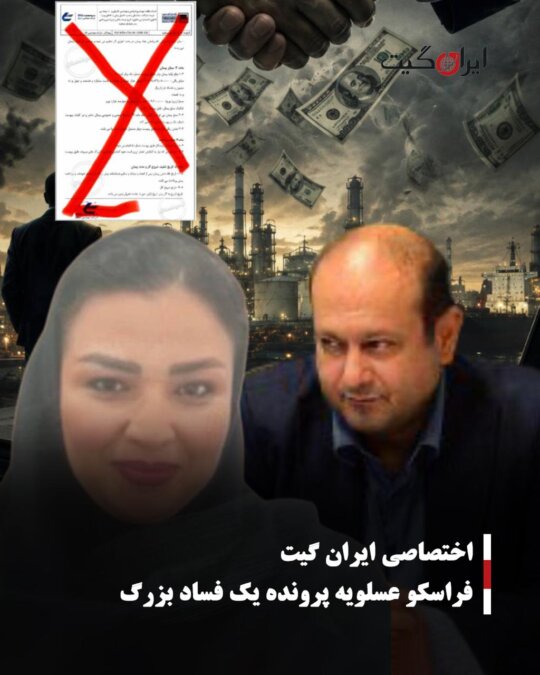
Behind the scenes of a controversial contract in Frasco Asaluyeh: from hefty figures to inspection flaws
The Frasco Asaluyeh case has once again made headlines due to significant doubts and flaws in a major financial contract. The contract involves the names of Manouchehr Bakhshi Sasi, CEO of Frasco, and Tara Engineering Company, and now, technical and legal reports have raised serious questions about how it was drafted.
According to the disclosed information, contract FACMTACON0410000326 has created commitments of 109 million euros in foreign currency and 40 trillion rials in local currency, figures that double the sensitivity of the matter.
Significant suspicions: flaws that the inspection has noted on paper
However, the matter doesn’t end with the contract’s amount. The technical and legal report presented about the contract raises several fundamental flaws that, from the inspection’s perspective, could be detrimental to the employer and provide advantages to the contractor.
For instance, the contract is declared fixed on one hand, but on the other hand, the quantities of work are described as approximate and are to be finalized after signing the contract, a matter that could pave the way for shifting amounts and unconventional profit distribution.
On the other hand, in Appendix 2, there is no list of quantities and unit prices of works, meaning that from the outset, no specific pricing basis has been determined for changes and additional works.
Another issue is the 10% cap on delay damages, while delays in a major oil and petrochemical project could inflict much heavier damages on the employer.
Additionally, the use of ambiguous language in the contract text regarding obligations is another raised issue, an ambiguity that could lead to disputes and demands for additional costs as the project progresses.
Finally, according to the presented report, the contractor’s financial responsibility is limited to 100% of the contract amount, a clause that, from the inspection’s perspective, could limit the employer’s financial rights in the event of heavy damages.
These cumulative flaws have led the technical and legal report on the contract to be questioned for its unilateral terms and significant advantages granted to the contractor.
A 24-month contract with penalties that are questionable
Alongside these contractual flaws, it is said that despite the project’s vast scope, 24 months have been allocated for execution, and the delay damages have been set at only 10% of the contract amount.
The question arises whether such a cap is proportionate to the risks and potential delay damages in a project of this scale or not.
The trust fund saga: Where did the money go?
The controversies, however, are not limited to the contract text. In this narrative, the project’s trust fund section has also been questioned, with claims that amounts in the range of several tens of millions of euros have reached the CEO and beneficiaries through this route.
This matter requires a thorough examination of the financial documents of the trust contracts and the flow of funds.
The name Sahar Bikshahrehis is involved
Furthermore, the name Sahar Bikshahrehis has also been mentioned, a person who, according to the text, is involved in Frasco’s contracts and is close to Manouchehr Bakhshi. The special relationship between these two might answer many questions.
Bikshahrehis has also played a special role in Oman contracts.
The shadow of the Naft Jay case over Manouchehr Bakhshi’s name
In continuation of this report, Manouchehr Bakhshi’s name has been linked to the Naft Jay case and the bitumen sale saga. Part of the proceeds from the bitumen sale, which was under trustee management, has not yet fully returned.
The ball is now in the court of regulatory bodies
The main question now is whether all these contractual flaws and financial claims were merely management and contractual errors, or whether there was also favoritism and rent-seeking behind them.
What matters at this stage are the documents and inspection reports, as the raised technical and legal flaws, from price and quantity ambiguities to the absence of a price list, the 10% delay damage cap, and the contractor’s liability limitation, all require clear answers.
Ultimately, it must be determined who drafted and approved this contract, who benefited from its terms, and whether the anticipated advantages in the contract aligned with the interests of Frasco Asaluyeh or not.
