



The story of the $800 million fake payment was exposed
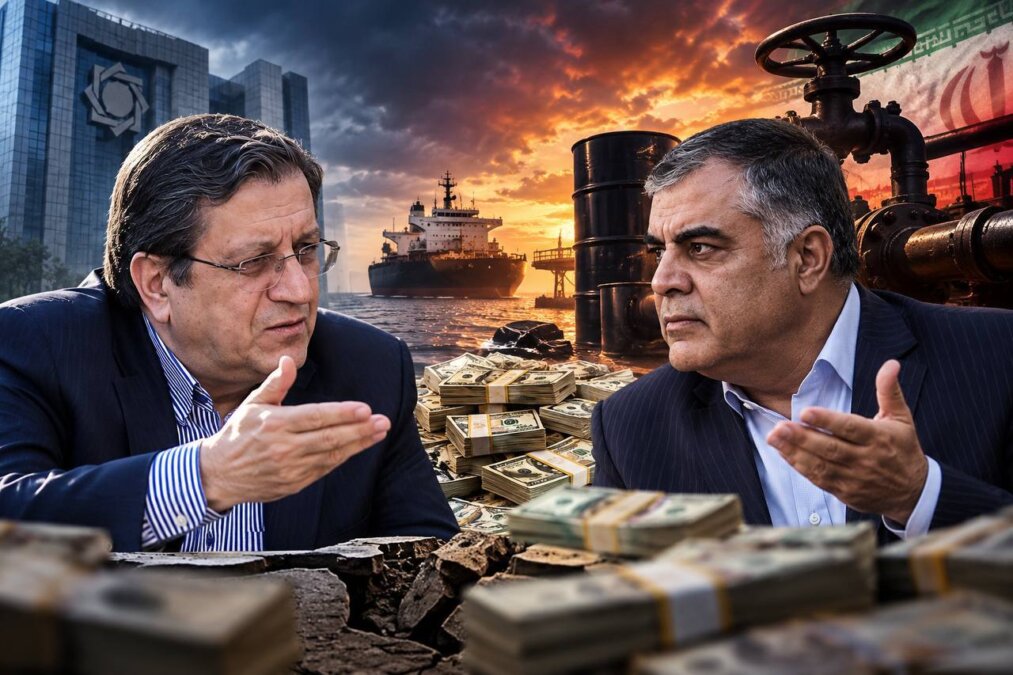
In a confidential meeting, the Minister of Oil denied any personal responsibility regarding the case of several billion dollars in foreign currency from oil sales that have not returned to the country. Paknejad said in this meeting that the responsibility for selling oil lies with the National Iranian Oil Company, not the Minister personally, and that the board of directors, the CEO of the National Iranian Oil Company, and Behzad Shamsi, the company’s financial director, are responsible for the multi-billion dollar loss of money from oil sales. But the more important part of the story goes back to late January, where according to Paknejad, at Behzad Shamsi’s insistence, he contacted Hemmati, the Central Bank governor, to have the Central Bank confirm the $800 million payment by Bank Eghtesad Novin. The noteworthy point is that the Minister of Oil claimed in the same meeting that he was unaware of several important facts. Such a payment during the Chinese New Year holidays was not possible. Transferring $800 million in one day was practically impossible. This amount was far more than the Central Bank’s set limit for each bank and deposit into trustee accounts. Nevertheless, the Minister of Oil pressured the Central Bank to confirm the receipt of funds that essentially had not been received, and according to the explanations provided, it was not possible to receive them under the mentioned conditions. This means the issue was not just a simple administrative disagreement; a request for confirmation of a fake payment, or what is called a ‘fake payment,’ was made, a request that Hemmati, the Central Bank governor, opposed, and disputes escalated from there. This payment was related to the largest known debtor trustee of oil sales, a trustee now facing a multi-billion dollar debt. On the other hand, the Minister of Oil has implicitly said that this trustee had connections with some individuals in the National Iranian Oil Company, including Behzad Shamsi, a connection that, according to what was stated in the meeting, could have paved the way for misconduct and corruption. Now the main question is, why did the Ministry of Oil approach the Central Bank to confirm money that had not been received? Why was a request for confirmation of such a payment made? Who was responsible for overseeing the performance of the trustee now facing a multi-billion dollar debt? What exactly was the role of the CEO, the board of directors, and the financial director of the National Iranian Oil Company in this case? And if the Minister of Oil was unaware of the impossibility of such a transfer and the Central Bank’s set limits, why did he personally contact the Central Bank governor to confirm the payment? This case is no longer just about money that hasn’t returned; it’s about the mechanism of oil sales, the performance of trustees, the oversight of the National Iranian Oil Company, and the request for confirmation of funds that, according to the narrative presented, had essentially not been received. The public has the right to know what happened to several billion dollars in this case, who made the decisions, and exactly where the responsibility of each official and manager lies.
