
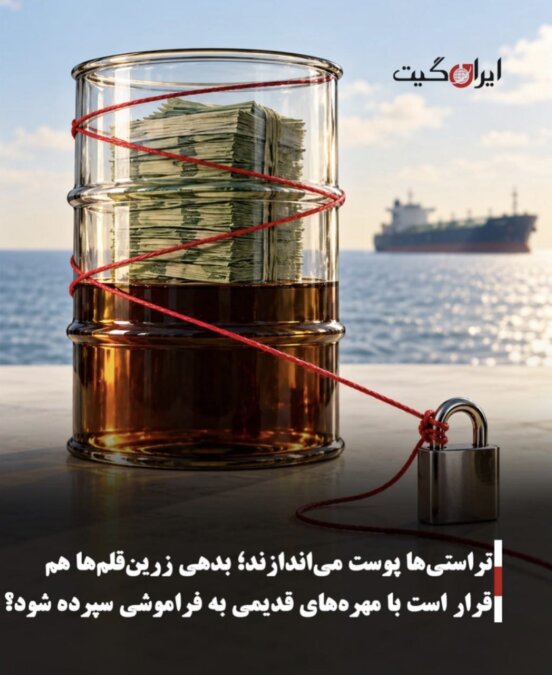
The trusts are shedding their skins, and the debts of the Zarrin Qalam are also supposed to be forgotten along with the old players.
New networks, new faces, different paths for oil money, but who will settle the Zarrin Qalam accounts? Amid whispers of changing the structure of oil trust networks and the possibility of some old circles stepping aside, one sensitive case remains ambiguous: What will be the fate of the debts attributed to the Zarrin Qalam? If the old intermediaries are to be replaced by new faces, new companies enter the field, and the paths for selling oil and transferring funds change, what will happen to past financial commitments? But the story of the Zarrin Qalam is not just a name among the trust networks. The main question is what exactly has been the role of the Zarrin Qalam family members, affiliated companies, and potentially related entities in the chain of oil sales, fund receipts, and settlement of financial commitments? Have all the accounts and contracts related to this collection been reviewed? Is the amount of debts attributed to them specified? Have potential claims been collected, or do they remain unresolved among intermediary companies and multiple accounts? And more importantly, if the trust networks change, what guarantee is there that the financial case of the Zarrin Qalam will not be sidelined along with the old players? This ambiguity becomes more serious when network changes occur without publishing an audit report, clarifying contract parties, and determining responsibility for past commitments. Changing company names, introducing new intermediaries, or shifting managers alone neither settles past debts nor removes the contractual responsibility of previous individuals and entities. The big question is, before the formation of new circles, will the financial case of the Zarrin Qalam be placed on the audit table, or will only the names of the players change and the old questions remain unanswered? If there are debts attributed to this collection, what is the exact amount? Which individuals or legal entities are responsible? What guarantees have been provided for the return of funds, and how much of the claims have been collected? Until these questions are answered with credible documents, neither can a definitive judgment be issued about the amount of Zarrin Qalam’s debt nor can the case be considered closed. Trusts may change, circles may be rearranged, and new players may sit at the negotiating table, but one principle must not change: the account of oil money must be clarified to the last dollar. The Zarrin Qalam case must not be lost in the shadow of changing trust networks. First, settle debts and commitments, then rearrange the players.