
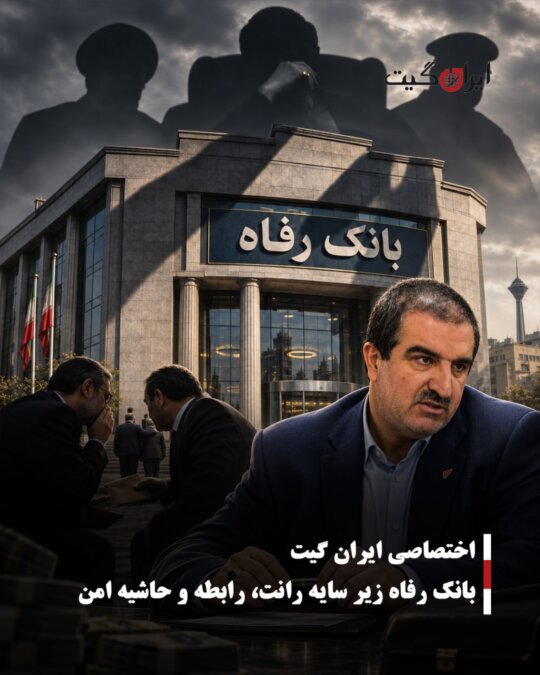
Bank Refah Under the Shadow of Nepotism, Connections, and a Safe Haven
The case of ambiguities and corruption allegations in Bank Refah ranges from questionable appointments to the necessity of examining family relations and creating a managerial safe haven. The allegations regarding the managerial performance of Esmail Lalehgani in Bank Refah have raised serious and numerous questions about how this bank is run, appointments in sensitive positions, behind-the-scenes relationships, and the potential formation of a network of non-transparent relations. Based on information presented in documents and whistleblower letters comprising 26 points of financial, managerial, and employment allegations, one of the areas worth investigating is the employment of individuals such as Navid Rahgozar and Mehdi Karami in sensitive positions at the bank, despite claims of their dual citizenship. This is a matter whose validity and compliance with the country’s laws and regulations should be reviewed by competent authorities. But the matter does not end here. Another very sensitive aspect of this case is the claim of employing the brothers of two senior judicial and law enforcement officials in the group associated with Bank Refah’s management. If true, this raises important questions about how these individuals were recruited and appointed, their professional qualifications, the possibility of conflicts of interest, and the potential use of family relations to create a managerial safe haven. Were these appointments made based on merit and legal regulations, or did family ties and connections play a role? Could such connections have facilitated influence, reduced effective oversight, or created informal immunity for certain managers? It is expected that judicial bodies, the General Inspection Organization, the Court of Audit, and supervisory and security authorities will independently and without regard to individuals’ positions, investigate the following: 1. Dual citizenship of individuals employed in sensitive positions and their compliance with relevant laws. 2. Employment history, appointment procedures, and professional qualifications of the individuals mentioned. 3. The employment of the brothers of two senior judicial and law enforcement officials and the potential role of family relations in these appointments. 4. Conflicts of interest, exertion of influence, or creation of a safe haven for managers and related individuals. 5. Review all points of the whistleblower letter and match the allegations with the bank’s financial, administrative, and employment documents. Bank Refah is not the personal property of managers nor a place for distributing family and organizational privileges. Any misconduct, nepotism, influence, or potential misuse of administrative positions, regardless of names and positions, should be addressed. Transparency in this case is a public demand. The public has the right to know who, with what qualifications, and based on what criteria have gained access to sensitive positions in this bank, and whether family and organizational relations have played a role in these appointments. This case requires immediate attention, publication of investigation results, and accountability from all related individuals. No official or connection should prevent the truth from coming to light. More details about the network of appointments and other raised issues will be published.