

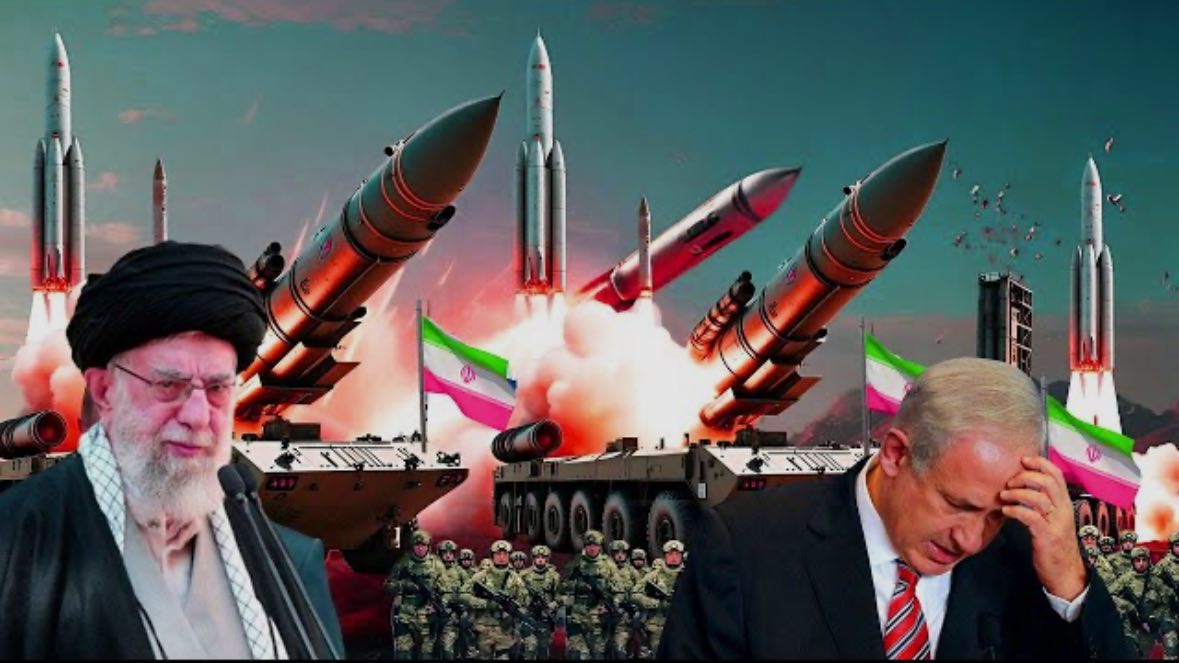
Iran’s Missile Message: A New Warning to Israel
According to Iran Gate News Agency, in the latest phase of the naval exercise ‘Eghtedar’, Iran sent a clear message about its expanding deterrent capabilities and long-range offensive capacities to regional and extra-regional players by launching coordinated cruise and ballistic missiles from deep within its territory towards targets in the Sea of Oman.
On December 5, 2025, during its naval exercise ‘Eghtedar’, the Islamic Revolutionary Guard Corps Navy of Iran conducted a coordinated attack using cruise and ballistic missiles, launching from domestic positions towards targets in the Sea of Oman. Iranian officials described this exercise as a direct warning to Israel and U.S.-allied countries, while also emphasizing Tehran’s efforts to expand its anti-ship capabilities.
According to reports published by several Iranian media outlets, on December 5, 2025, the Islamic Revolutionary Guard Corps Navy of Iran utilized the second phase of the ‘Eghtedar’ exercise to showcase what was termed as an operational package of anti-ship missiles. Coordinated launches, consisting of a combination of land-based cruise missiles and short-range ballistic systems, were executed from scattered internal sites towards designated targets in the Sea of Oman. Iranian commanders considered this event a strategic message for Israel and U.S. regional partners, while foreign analysts assessed this demonstration as a sign of Tehran’s ongoing efforts to employ reliable long-range maritime offensive options.
Among the missiles launched, several types of long-range cruise missiles, including Ghadir 110, Ghadir 380, and Qadir, alongside the ballistic missile 303, were observed. The coordinated launch from deep within Iran’s territory is seen as a strategic focus on confrontation capabilities and the ability to conduct rapid attacks. The Revolutionary Guard also integrated drone units into this exercise, and reportedly, these drones targeted simulated enemy bases simultaneously with the missile operations, highlighting an increasing emphasis on multi-domain coordination.
These launches occurred amid rising regional tensions and were widely interpreted as a dual message from Tehran. On one hand, it emphasized readiness to cooperate with neighboring Gulf countries, and on the other, it was a clear warning to regional rivals that Iran retains the capability for swift and decisive responses to any potential actions. While Iranian officials emphasized the defensive nature of the exercise, much of its message, especially in light of recent tensions, was assessed as directed towards the United States and Israel.
According to regional defense observers and intelligence analysts, the presence of the Ghadir 380 missile, one of Iran’s most advanced cruise missiles introduced earlier this year, was particularly noteworthy. The Ghadir 380, capable of being launched from mobile road platforms or even underground silos, with a range exceeding 1,000 kilometers, high subsonic speed, and low-altitude flight capability, poses a challenge to naval air defense systems.
A distinguishing feature of this exercise was the domestic origin of the launches. Unlike previous exercises that primarily focused on coastal or maritime platforms, this phase of the ‘Eghtedar’ exercise highlighted a deeper level of strategic functions. The Revolutionary Guard emphasized its ability to target maritime objectives from within Iran’s territory, underscoring a layered deterrent approach and readiness for rapid response. This method complicates enemy targeting cycles and reflects Tehran’s intent to offset conventional naval warfare limitations by relying on geographic depth and missile volume.
Defense analysts speaking with Army Recognition pointed out that such land-based attacks on maritime targets could pose significant targeting challenges for regional rivals, particularly U.S. naval assets and its allies in the northern Arabian Sea and Gulf of Oman. A senior Western defense official, who wished to remain anonymous, stated that this exercise signifies the gradual maturation of Iran’s anti-access/area denial (A2AD) doctrine, now combining mobility, stealth, and precise attack with increasing confidence.