
New York Times Report on the Rift in Governance
Farnaz Fassihi’s report in the New York Times presents a picture of a deep rift within the power structure of the Islamic Republic and claims that the peace agreement with Donald Trump’s administration did not derail due to a single decision at the top of the regime but as a result of actions by a hardline faction within the governance. According to this report, the secret attack on three commercial ships in the Strait of Hormuz in July, which led to the burning of a Qatari LNG tanker and damage to other ships, was carried out without the knowledge of Masoud Pezeshkian, the Supreme National Security Council, and even the Commander-in-Chief of the Revolutionary Guards. Fassihi, based on conversations with eight Iranian officials, three members of the Revolutionary Guards, and four former officials, as well as reviewing statements from senior officials, describes this attack as an action aimed at undermining the agreement and pushing Iran and the U.S. back onto the path of war.
The main focus of the report is the role of Hossein Taeb, the former head of the Revolutionary Guards’ Intelligence Organization and the current head of the Basij, in opposing the agreement. According to three Iranian officials, internal investigations have linked the decision to attack the ships to Taeb, a person who had opposed the agreement from the start and argued to Iran’s new leader that ending the war and making a deal with the U.S. was a mistake. The significance of this narrative is not just in attributing responsibility for a specific operation but also in showing that in a situation where the decision-making mechanism in Tehran is disrupted, security and military actors opposed to negotiation have managed to steer the country’s foreign policy away from the official decision-making process. The report also emphasizes the ambiguous leadership status of Mojtaba Khamenei, who has not appeared in public since coming to power in March, and there are even doubts among Iranian officials about the authenticity of some messages attributed to him. In such conditions, the power vacuum at the top of the regime could intensify the competition between moderate and hardline factions.
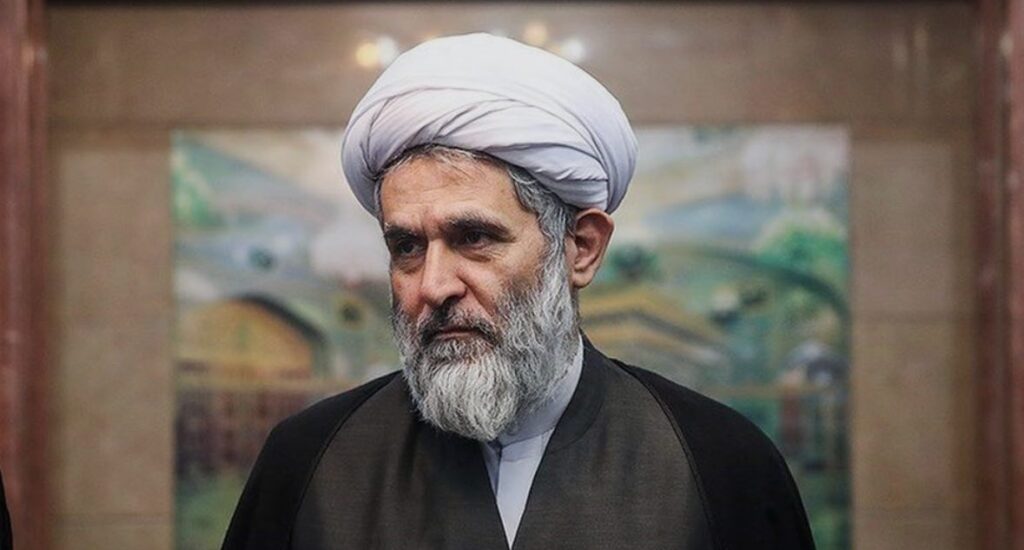
From a political perspective, the most important outcome of this report is that the issue is not merely the failure of an agreement, but a shift in the balance of power within the Islamic Republic. After the collapse of the agreement, severe conflicts arose among officials and commanders, but ultimately the hardline faction gained the upper hand, and Iran and the U.S. once again entered a phase of military escalation. While Iran’s economy is under pressure from a maritime blockade, halted oil sales, a currency devaluation, and rising inflation, hardline commanders have proposed a plan to expand the war through attacks by Iran and its proxy forces, including the Houthis and Iraqi armed groups. Pezeshkian and Mohammad Bagher Ghalibaf have warned about the danger of dragging the country into the abyss, but the report says that until last week, the hardline faction had taken control of the decision-making process. Therefore, the New York Times’ narrative can be seen as an indication of the Islamic Republic’s transition from a merely external conflict with the U.S. to an internal decision-making crisis. A crisis in which the survival of Pezeshkian’s negotiation-focused approach against the security-military networks advocating for increased tension has become the main issue in Iranian politics.