

Trump, the Security Document, and the Dream of Absolute Supremacy
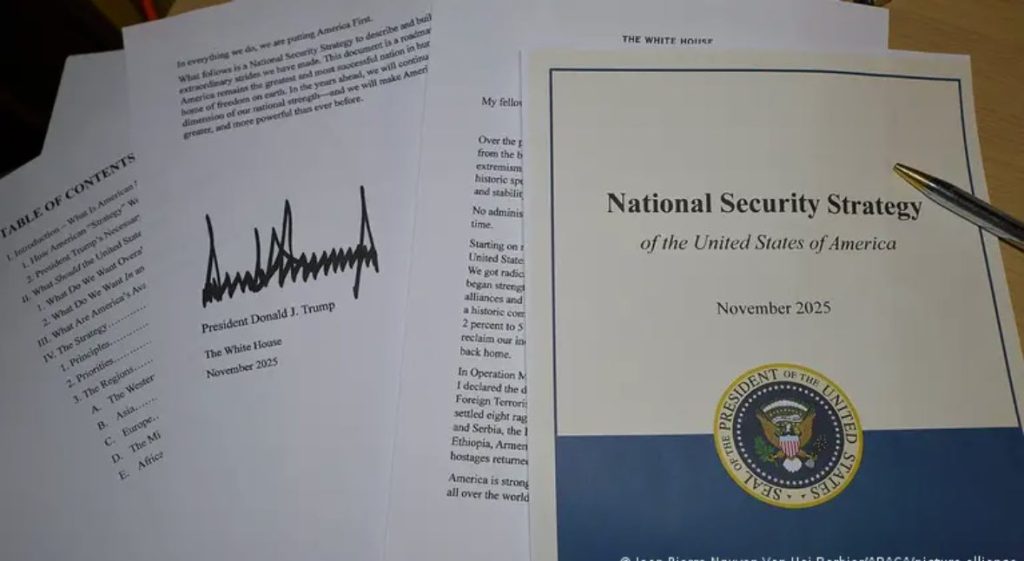
According to the Iran Gate News Agency, in the first week of December 2025, the Trump administration released its 33-page National Security Strategy document. This document, with its harsh tone and bold claims compared to previous administrations, reflected America’s comprehensive superiority and the weakness of other global players, garnering widespread attention worldwide. It sheds light on the path of U.S. foreign policy in the coming years under a cloud of ambiguity and decentralization.
The release of the Trump administration’s National Security Strategy document in a 33-page format in the first week of December 2025, mid-December 1404 in the Iranian calendar, like many actions and decisions of this administration, sparked widespread attention and notable reactions globally. Publishing the National Security Strategy document in the United States is considered a bureaucratic and institutionalized action, and U.S. presidents usually formally release the general frameworks of national security policies at least once during their presidency. The Trump administration, seeking to present a distinct image of its governance style and political approach compared to previous U.S. administrations, has adopted a different approach in the content of this document and offered a somewhat non-traditional text in terms of content. However, this difference does not necessarily mean pursuing a completely different path.
It is important to emphasize that in a short period, few documents have managed to attract such a significant level of media and analytical attention and create a wave of debate and controversy. The fundamental question is how this document should be re-read and analyzed. In response, the claims made by the Trump administration within the framework of the National Security Strategy document should be considered. This claim analysis should be examined simultaneously and in connection with the actions and practices of the Trump administration, and ultimately, the implications of this document in various areas related to U.S. national security should be the focus of analysis. The U.S. National Security Strategy document is essentially a political manifesto of the Trump administration and its ruling team.
At least three central claims can be identified within the lines and phrases of this document. The first claim is that previous U.S. administrations have made errors and deviations in pursuing national security policies, and beyond that, there is a sharp and fundamental critique of the internal and international governance style of the United States. Undoubtedly, the harsh and bitter tone used in this document towards current and former national security elites is unprecedented compared to other U.S. National Security Strategy documents. Simply put, the central claim of the document is that previous U.S. administrations and country managers did not have a proper understanding, and now we have the correct understanding. Emphasis on a superior, unique, and even sacred understanding compared to the ignorance of predecessors is prominently highlighted, especially in the introductory sections of the document.
The second claim emphasizes the comprehensive supremacy of the United States in all areas of international life. Among the various dimensions of this supremacy claim, what stands out the most is the emphasis on America’s normative supremacy based on Trump’s and his associates’ specific interpretation of superior American norms. From this perspective, the Trump administration’s National Security Strategy document is intensely identity-focused, civilization-oriented, and norm-driven, concentrating on a unique definition of American identity and, consequently, Western identity. In this framework, the interconnectedness and solidarity of the Anglo-Saxon world are also significantly emphasized.
The third claim of the document is based on assessing the weaknesses and strengths of other international actors. In this framework, Europe is depicted as a weak actor, Iran is introduced as a weak country, China is considered a manageable actor despite its growing power, and claims about other regions of the world are made that, in some cases, are significantly distant from field realities. For example, the Middle East is portrayed as if the Gaza ceasefire and the attacks by the Israeli regime and the United States on Iran have led to peace in the region.
Alongside these claims, considering Trump’s practical behavior in policymaking and action, it is difficult to consider him a document-oriented president. Strategic documents are generally drafted to set frameworks and regulate behaviors, but Trump’s personality traits and political psychology indicate a lack of serious adherence to such frameworks. It seems that for him, a framework beyond personal interest—and not even national interest of America—holds relevance, and if necessary, he is ready to break any rule on this path.
Despite this reality, at the level of action analysis, the new National Security Strategy document places special emphasis on the concept of national sovereignty and criticizes international organizations for challenging America’s national sovereignty. Emphasis on national sovereignty does not mean respect for the sovereignty of other countries but rather implies U.S. dominance in international relations.
Ultimately, the implications of the U.S. National Security Strategy document should be evaluated within the framework of interpreting and shifting the focus of this country’s foreign policy in the coming years. The first transformation in this new focus is a serious and comprehensive return of America to Latin America and, more broadly, the continent of America. Based on the provisions of this document and its several months of behavior in the second term of Trump’s presidency, the United States will strive to apply special focus on Latin America both in a continental approach and within the framework of bilateral relations with each country in this region. The second focus is a return to a kind of international policy based on resolving issues among major powers.
What emerges from this document is America’s inclination towards a kind of compromise and deal with Russia and, to some extent, with China. Recognizing and accepting spheres of influence is the spirit governing the model of interaction among major powers in this document. The third subject is essentially about decentralization.
Trump’s America will not have significant strategic focus on Europe, and even beyond that, the document’s view of Europe is disdainful and critical. Importantly, this document specifically adopts a negative approach towards the European Union as a multilateral institution. Additionally, the document somewhat decentralizes from the Middle East and, by referencing the developments of the past few decades, outlines a path that indicates America has little interest in continuing the pattern of past conflicts in this region. In summary, the National Security Strategy document can be seen as a reflection of the dreams, claims, and perceptions of the Trump administration. However, the fundamental question remains whether U.S. foreign policy will actually proceed based on this document or not.